
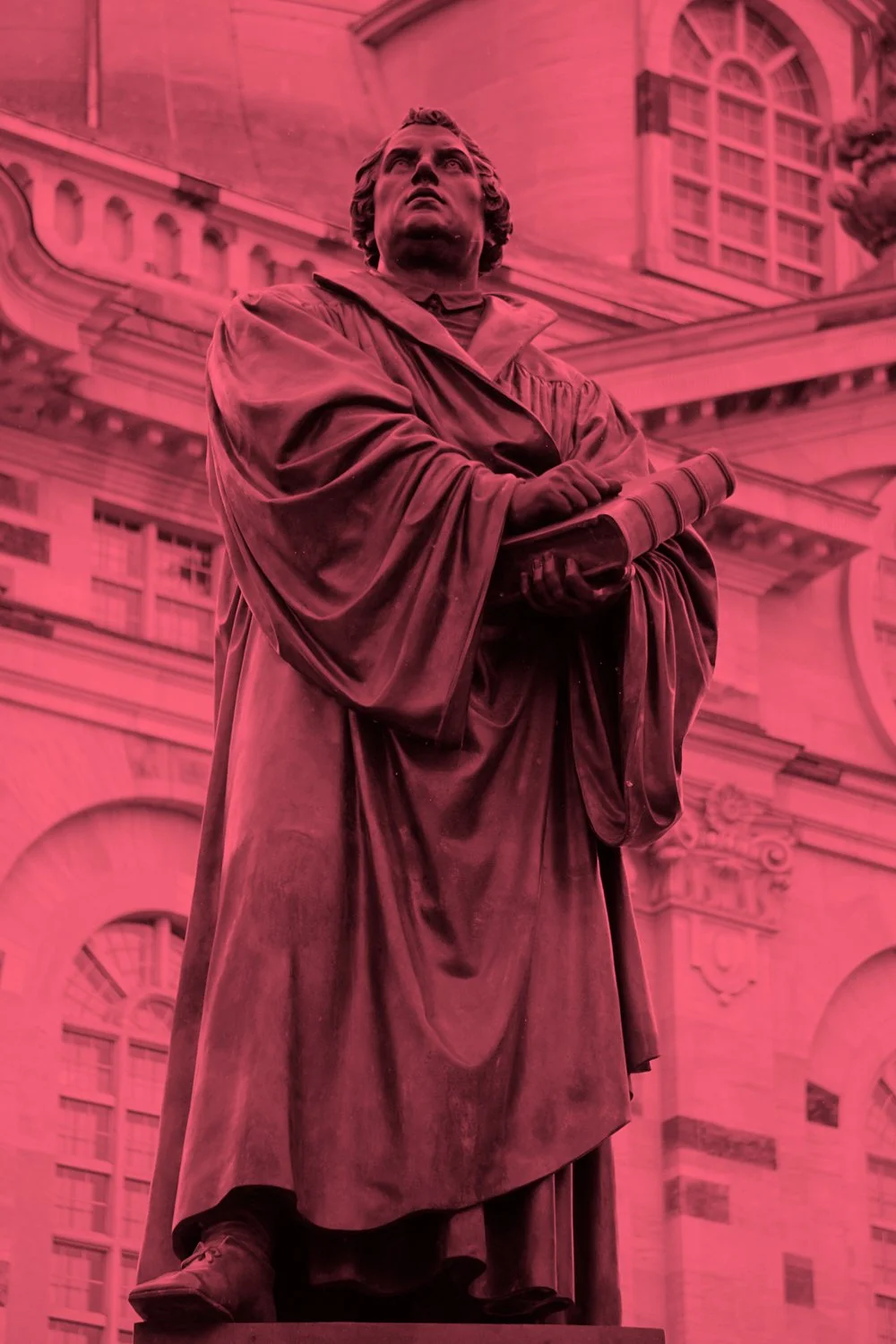
This is now week four of exploring the five solas of the reformation. The word “sola” in Latin means “only” and these five solas are statements from the Protestant Reformation that outline some of the major disagreements between Protestants and Catholics. This week I want to explore the idea of solus Christus, which means “Christ alone.” Solus Christus affirms the idea that there is only one mediator between God and humanity, and that mediator is Jesus Christ.
Paul says this directly in 1 Timothy 2:5, which says:
1 Timothy 2:5
5 For there is one God, and there is one mediator between God and men, the man Christ Jesus,
We also find similar ideas in other passages of Scripture:
John 10:9
9 I am the door. If anyone enters by me, he will be saved and will go in and out and find pasture.
John 14:6
6 Jesus said to him, “I am the way, and the truth, and the life. No one comes to the Father except through me.
Acts 4:12
12 And there is salvation in no one else, for there is no other name under heaven given among men by which we must be saved.”
One Way to God
The reformers were adamant that the clear teaching of the Bible is that there is only one way for us to be saved, and that is through Jesus Christ. There are no other ways to God. There are no other paths. Islam won’t work. Buddhism doesn’t cut it. Hinduism isn’t the truth. And good old fashioned religion (e.g. - trying to be a good moral person) actually will keep us from God rather than drawing us closer to him. Jesus said very clearly, “I am the way, and the truth, and the life, and no one can come to the Father except through me.” This is a hard word, a sobering word, but one clearly taught in the Bible.
Praying Through Saints?
Both protestants and catholics would agree about the centrality of Jesus, but would disagree about the word “alone.” Nate Pickowicz explains, “Roman Catholicism is a complex system, full of nuance. And while both Protestants and Catholics affirm salvation through Jesus Christ, Catholicism does not affirm that it comes through Christ alone. Rather, they teach that there exists a number of other persons and processes to aid in the salvation of the believer” [1]. Pickwicz goes on to explain that Catholics seek additional merit from: the Mass (which they believe is a literal re-sacrificing of Christ continually), through dead Saints and the Treasury of Merit (which teaches that it’s possible for us to gain the merits of good works that past saints have earned through holy living), through praying to Mary, and through the absolution of our sins by confessing them to a priest.
Catholics don’t just pray to God directly, they also pray to God through the mediation of Mary and other saints and by praying through physical relics and icons. The idea is something along the lines of, “surely Jesus will listen to his mom.” So if we pray to Mary, then that’s an extra-strong prayer that Jesus will surely listen to and answer. But the problem with this sort of thinking is that it is no where taught in Scripture. Instead Scripture teaches us that we have direct access to God, and that our only mediator is Jesus. We don’t need to pray to Mary, or any other saint, or through any sort of physical object. And we don’t need to have our sins absolved by a priest because all our sins are already forgiven if we’ve professed faith in Jesus. What Jesus has done by his life, death, and resurrection has brought us directly into intimate communication with God. Jesus in fact taught us to call God “Father”—a radical idea at the time because it was so intimate.
The Torn Temple Curtain
One of the best pictures of this idea is found by examining the temple curtain which was torn in two from top to bottom at Jesus’ crucifixion. This curtain symbolized the idea that people were separated from God. God was on one side of the curtain in the holy of holies, and we were on the other side of the curtain away from him. In the Old Testament, only the high priest could go into the holy of holies, and then only once a year with a blood sacrifice. The sacrifice was necessary because it provided atonement for sins. But these sacrifices had to be made continually because we kept on sinning. In this way, the priests in the Old Testament did act as mediators, or go-betweens, between God and the people. But when Jesus died, the curtain was ripped in two (from top to bottom because God initiated the tearing). Why? Because now a perfect sacrifice (Jesus) had been made. And now for all time, we have direct access to God simply through faith in what Jesus has done for us. Jesus is our mediator, and we don’t need any other mediators.
The writer of Hebrews explains it this way:
Hebrews 7:26-27
26 For it was indeed fitting that we should have such a high priest, holy, innocent, unstained, separated from sinners, and exalted above the heavens. 27 He has no need, like those high priests, to offer sacrifices daily, first for his own sins and then for those of the people, since he did this once for all when he offered up himself.
Only Jesus
Pickowicz explains: “The Reformers set out to address the issue of the sufficiency of the work of Christ. Is there anything else needed? Anything else that must be done? To give a definitive answer, they declared: solus Christus—‘Christ alone’” [2]. And the reformer Ulrich Zwingli exclaimed: “We know from the Old and New Testaments of God that our only comforter, redeemer, savior, and mediator with God is Jesus Christ, in whom and through alone we can obtain grace, help and salvation, and besides from no other being in heaven or on earth” [3].
There is a lot more to say about all of this, and I’m trying represent the beliefs of catholics fairly (though I disagree with them). But to put it simply, there is no teaching in Scripture anywhere about praying to Mary or other saints, or about the need for us to gain additional merit in order to be saved. Jesus has done everything we need. All we need to do is confess him as savior and Lord. So we proclaim with the reformers: “Solus Christus”—Christ Alone!
- Ben
[1] Nate Pickowicz, Why We’re Protestant: The Five Solas of the Reformation, and Why They Matter (Ross-shire, Scotland: Christian Focus, 2022), 88.
[2] Nate Pickowicz, Why We’re Protestant: The Five Solas of the Reformation, and Why They Matter (Ross-shire, Scotland: Christian Focus, 2022), 81.
[3] Quoted by: Nate Pickowicz, Why We’re Protestant: The Five Solas of the Reformation, and Why They Matter (Ross-shire, Scotland: Christian Focus, 2022), 84.